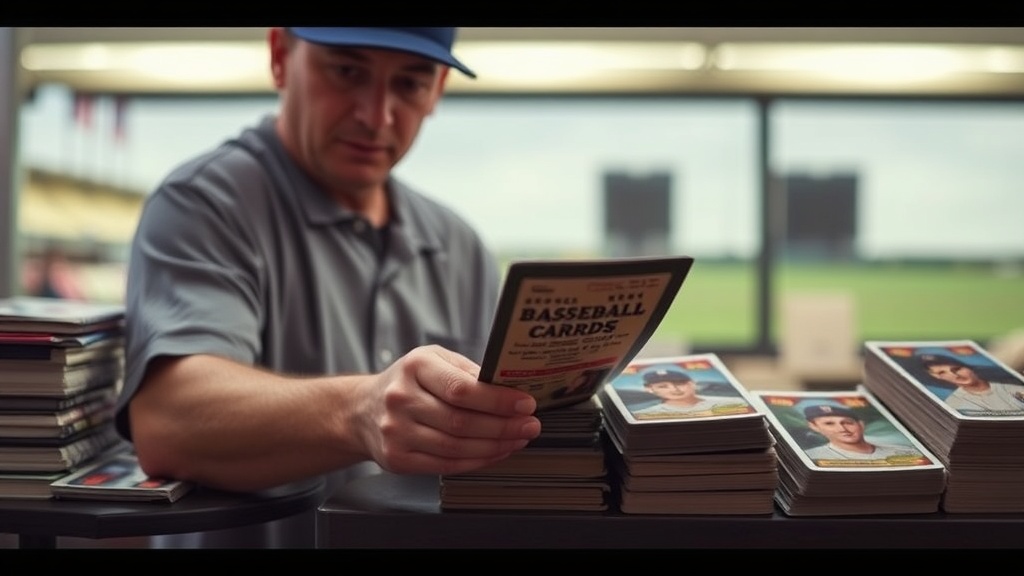
How to Buy Vintage Baseball Cards: A Complete Beginner's Guide

Vintage baseball cards hold real value—both sentimental and financial. This guide covers everything needed to start buying wisely: where to shop, what to look for, how to spot fakes, and how much to budget. Whether building a personal collection or investing for the future, knowing the fundamentals saves money and prevents costly mistakes.
What Makes a Baseball Card "Vintage"?
A baseball card qualifies as vintage when issued before 1980. The pre-war era (before 1945) includes tobacco and gum cards from the early 1900s. The post-war period (1945-1979) saw the rise of Topps, Bowman, and Fleer dominating the market. Cards from 1980 onward fall into the modern or "junk wax" category—produced in such massive quantities that most hold little value.
The distinction matters. Vintage cards were printed in limited runs, often with lower-quality materials that make high-grade examples rare. A 1952 Topps Mickey Mantle in mint condition recently sold for $12.6 million. Meanwhile, boxes of 1988 Donruss sit unsold at garage sales.
Condition drives everything in vintage collecting. The Professional Sports Authenticator (PSA) uses a 1-10 grading scale. Most vintage cards survive in lower grades—PSA 4 (Very Good-Excellent) or PSA 5 (Excellent) represent typical finds. Cards graded PSA 7 or higher command significant premiums.
Where's the Best Place to Buy Vintage Baseball Cards?
The best sources depend on budget and experience level—each venue carries different risks and rewards.
Local card shops offer hands-on inspection. Kelowna has several reputable dealers who specialize in vintage inventory. You can examine cards under proper lighting, check for creases, and negotiate face-to-face. The downside? Limited selection and higher prices than online alternatives.
Card shows and conventions bring dozens of dealers under one roof. The National Sports Collectors Convention—held annually in different U.S. cities—represents the industry's largest gathering. Smaller regional shows happen monthly across Canada and the United States.
Online marketplaces dominate modern buying. eBay remains the largest vintage card marketplace, with thousands of listings updated hourly. Check Out My Cards (COMC) specializes in authenticated inventory with transparent pricing. Heritage Auctions and Goldin Auctions handle high-end pieces starting at five figures.
Estate sales and garage sales offer the thrill of discovery—and the risk of disappointment. Most "found in the attic" stories end with water-damaged commons from the 1980s. That said, legitimate vintage finds do happen. Arrive early, bring cash, and know how to spot reprints.
| Source | Best For | Average Price Range | Risk Level |
|---|---|---|---|
| Local Card Shop | Beginners, authentication advice | Retail to 10% above market | Low |
| Card Shows | Bulk buying, negotiation | 5-15% below retail | Medium |
| eBay (Auction) | Competitive deals | Market rate | Medium-High |
| COMC | Authenticated singles | Market rate + fees | Low |
| Estate Sales | Raw vintage lots | Highly variable | High |
How Can You Tell If a Vintage Card Is Authentic?
Counterfeits plague the vintage market—knowing the warning signs protects your wallet.
Start with the basics. Genuine vintage cards feel different. Pre-1980 cardboard has specific texture, weight, and aging patterns. Reprints often use modern cardstock that's too white, too stiff, or cuts that look machine-perfect.
Examine the printing. Vintage cards used lithographic or photogravure processes. Under magnification (a 10x loupe costs about $15), authentic cards show distinct dot patterns. Modern reprints use digital printing with different ink laydown.
Check the back. Many reprints reproduce the front reasonably well but fail on reverse details. Font variations, spacing issues, and color shifts often appear on fakes. Compare suspected cards against verified examples from Trading Card Database.
Buy graded cards when possible. PSA, SGC (Sportscard Guaranty), and Beckett Vintage Grading encapsulate cards in tamper-evident cases. The slab includes certification numbers you can verify online. Yes, grading adds cost—expect $20-50 per card plus shipping. For cards worth over $100, the protection pays for itself.
Red flags to avoid:
- Sellers who refuse detailed photos or magnification shots
- Deals that seem too good—a $500 card listed for $50 is fake
- Cards with artificially aged corners (torn deliberately to appear vintage)
- Listings using stock photos instead of actual item images
- Sellers with new accounts and no feedback history
Which Vintage Baseball Cards Should Beginners Target?
Start with affordable Hall of Famers from the 1960s and 1970s. These cards offer historical significance without requiring second mortgages.
The 1971 Topps set features black borders that show wear easily—making high-grade examples valuable, but acceptable copies affordable. A Willie Mays or Hank Aaron from this set in PSA 4 condition runs $30-80. The 1965 Topps set offers colorful design and plenty of stars: Sandy Koufax, Roberto Clemente, and Willie Mays all appear.
Complete sets make excellent collecting goals. The 1969 Topps set contains 664 cards including Reggie Jackson's rookie. Building it card-by-card teaches condition assessment, pricing research, and patience. Expect to spend $800-1,500 for a complete set in decent condition.
Rookie cards historically appreciate best. Mickey Mantle's 1951 Bowman rookie. Hank Aaron's 1954 Topps debut. These cards carry premiums because they represent a player's first official card. The catch? Everyone knows this—rookie cards cost significantly more than subsequent-year issues of the same player.
Here's the thing about "investment grade" vintage: condition is everything. A 1968 Topps Nolan Ryan rookie in PSA 8 recently sold for $25,000. The same card in PSA 4? Around $800. The player is identical. The condition makes the difference.
How Much Should You Budget for Starting a Collection?
Smart vintage collecting starts modest. You don't need thousands—just clear priorities.
A beginner's monthly budget of $100-200 builds a respectable collection within a year. Focus on one player, one team, or one set. Specialization beats scattered buying every time. A collector focusing on 1960s Pittsburgh Pirates cards develops deep market knowledge—and spots undervalued pieces others miss.
Track every purchase. Spreadsheets work; specialized apps like CardLadder work better. Record purchase price, condition, date, and seller. This data reveals spending patterns and helps identify when you've overpaid.
Hidden costs add up fast. Shipping ($5-15 per order). Insurance (1-2% of declared value). Grading fees ($20-50 per card). Storage supplies—Ultra Pro top loaders, penny sleeves, and cardboard boxes run $50-100 for a starter kit. Budget for these or watch your margins disappear.
Worth noting: vintage cards appreciate unevenly. The market runs in cycles. 2020-2021 saw massive spikes followed by corrections in 2022-2023. Buy cards you genuinely enjoy owning. Financial returns might come—they might not. The enjoyment should never depend on it.
Storage Tips That Actually Matter
Buy proper supplies immediately. Penny sleeves protect surfaces. Rigid top loaders prevent bending. Never use rubber bands (they damage edges). Store cards flat in cool, dry environments—attics and basements destroy collections through temperature swings and humidity.
Consider safety deposit boxes for cards worth over $1,000 each. Home insurance rarely covers collectibles adequately. Specialized collectibles insurance through companies like Collectibles Insurance Services costs roughly 0.5% of appraised value annually.
Start small. Learn constantly. Connect with other collectors—local clubs, online forums, and social media groups share knowledge freely. The vintage baseball card community welcomes newcomers who show genuine interest and respect for the hobby's history. Your collection begins with education, not acquisition.