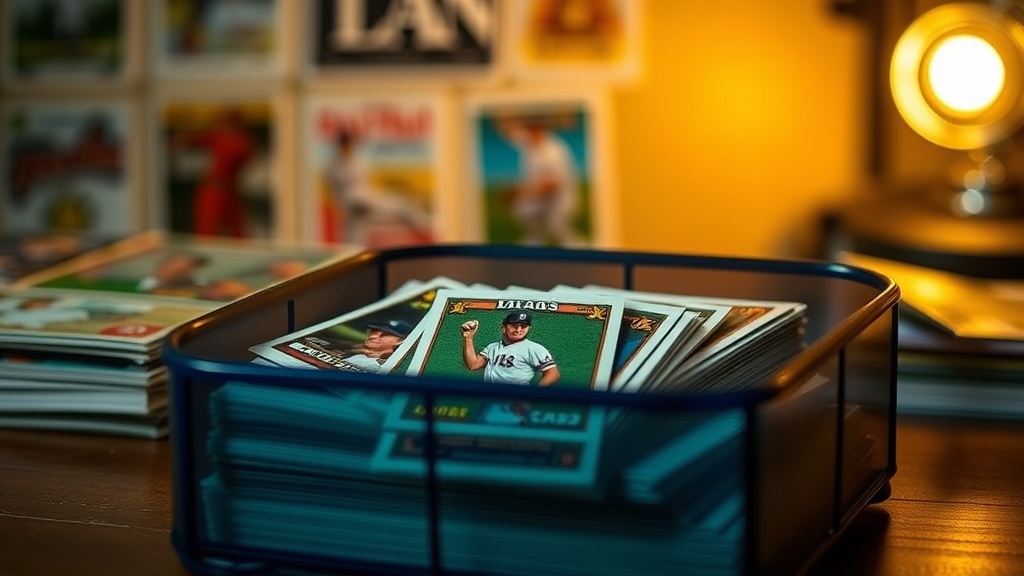
How to Properly Store and Protect Your Baseball Card Collection

What's the Best Way to Store Baseball Cards Long-Term?
The best way to store baseball cards long-term is in a cool, dry, dark environment using archival-quality materials designed specifically for collectibles. This post covers the complete storage system—from individual card protection to climate control—because a poorly stored collection can lose 50% or more of its value within just a few years. Whether you've got a shoebox of childhood favorites or a five-figure investment portfolio, proper storage isn't optional. It's the difference between a collection that appreciates and one that deteriorates.
Let's cut to the chase. Baseball cards are paper products. They're vulnerable to light, moisture, temperature swings, and physical damage. The 1989 Upper Deck Ken Griffey Jr. rookie card that sells for $300 in PSA 10 condition? Drop to a PSA 8 and you're looking at maybe $80. The difference often comes down to how that card lived its life before grading.
Storage isn't sexy. Nobody gets excited about penny sleeves and desiccant packs. But collectors who treat storage as part of the hobby—not an afterthought—are the ones who see real returns. Both financially and in terms of preservation.
Start With the Card Itself
Every card in your collection needs individual protection before it goes anywhere near a storage box. This is non-negotiable. Raw cards—ones without any protection—pick up surface wear every time they're handled. Oils from fingers, dust particles, even the friction of sliding against other cards causes damage you can't reverse.
The foundation is the penny sleeve. These thin, clear polyethylene sleeves cost about a penny each (hence the name) and provide basic surface protection. Ultra-PRO and BCW are the industry standards here—both make archival-safe sleeves that won't yellow or degrade over time. Avoid dollar-store sleeves. They're often made from PVC, which releases gases that damage cards.
For cards worth more than pocket change, add a toploader or semi-rigid card holder. Toploaders are rigid plastic shells that prevent bending and corner damage. They're great for shipping and short-term storage. For long-term storage of valuable cards, many collectors prefer Card Saver I semi-rigid holders—they're what PSA recommends for submissions, and they take up less space than toploaders.
Here's the thing about toploaders: they can trap moisture. If you live somewhere humid (looking at you, Florida and Louisiana collectors), consider adding a silica gel packet to your storage containers. Not inside the toploader—next to it.
What Supplies Do You Actually Need to Protect Baseball Cards?
To protect a baseball card collection properly, you'll need penny sleeves, toploaders or semi-rigid holders, storage boxes, and climate control solutions. The exact combination depends on your collection size, value, and available space—but skimping on any of these categories creates vulnerabilities.
Let's break down the storage hierarchy from individual cards up to the full collection:
| Protection Level | Best For | Recommended Products | Approximate Cost |
|---|---|---|---|
| Individual Card | All cards | Ultra-PRO penny sleeves, BCW soft sleeves | $0.01-0.03 per card |
| Rigid Protection | Cards $20+ or graded candidates | Ultra-PRO toploaders, Card Saver I | $0.15-0.40 per card |
| Short-Term Storage | Sorting, trading | BCW shoe boxes, cardboard storage boxes | $3-10 per box |
| Long-Term Storage | Valuable collections | BCW plastic storage boxes, fireproof safes | $25-200+ |
| Display | Showcase cards | Magnetic one-touch cases, UV-protected frames | $5-50 per card |
The catch? Price doesn't always equal protection. A $200 fireproof safe is worthless if you store cards at 75% humidity. A $3 cardboard box in a climate-controlled closet beats a plastic vault in a garage every time.
For boxes, you've got two main paths. Cardboard storage boxes (shoe boxes, BCW sorting trays, card houses) are affordable and work fine for short-to-medium term storage. They're light, stackable, and let cards breathe. Plastic storage boxes—BCW makes excellent ones—offer better moisture and pest protection. They're worth the investment for valuable cards or humid climates.
One more thing about boxes: don't overfill them. Cards packed too tightly get edge wear. Cards packed too loosely slide around and get corner damage. Aim for snug, not tight. If you can shake the box and hear cards moving freely, add filler.
Climate Control: The Invisible Enemy
Temperature and humidity are silent killers. Paper expands and contracts with moisture. Heat accelerates chemical breakdown. Combine the two—like a cardboard box in an attic—and you've got a recipe for curved cards, stuck surfaces, and faded colors.
The ideal storage environment stays between 60-70°F (15-21°C) with 30-50% relative humidity. That's basically normal indoor living conditions. The problems start when cards live in spaces humans don't: attics, garages, basements, storage units without climate control.
Worth noting: basements seem like logical storage spots (cool, dark, lots of space) but they're often humidity traps. If you must store cards in a basement, invest in a quality dehumidifier and monitor humidity with a hygrometer. They're cheap. Like, ten bucks cheap. There's no excuse not to have one.
Light exposure matters too—especially for cards in display cases. UV rays fade ink and damage card stock. Keep displayed cards away from direct sunlight. If you're framing cards, use UV-protective glass (Museum Glass or equivalent). Better yet, rotate displayed cards periodically so nothing stays exposed indefinitely.
How Do You Store Graded Cards Differently Than Raw Cards?
Graded cards—those sealed in plastic slabs by PSA, BGS, SGC, or CSG—don't need penny sleeves or toploaders but do require different storage considerations because of their size, weight, and vulnerability to slab damage. The hard plastic cases protect the card inside but can scratch, crack, or allow moisture entry at the seams.
PSA slabs measure about 3" x 5" x 0.25" and weigh significantly more than raw cards. Standard cardboard boxes designed for raw cards won't accommodate them. You'll need graded card storage boxes—BCW and Ultra-PRO both make versions sized specifically for PSA/BGS slabs. They typically hold 20-50 slabs depending on the model.
Slabs can scratch each other. The plastic isn't invincible. When storing multiple graded cards together, use PSA slab sleeves (soft protective bags) or place sheets of acid-free paper between slabs. Scratches on the slab case don't affect the grade, but they make the card less appealing to buyers and can obscure the label.
The heaviest graded cards—think thick memorabilia cards in BGS slabs—need extra support. Don't stack them horizontally. Store them vertically like books, with support on both sides to prevent leaning. Leaning creates pressure points that can crack slab corners.
For high-value graded cards, consider individual slab protectors or slab sleeves. These are essentially thick plastic bags that protect the slab itself from scratches and minor impacts. They're a few cents each and worth it for cards worth hundreds or more.
Organizing Your Collection
Storage isn't just about protection—it's about access. A disorganized collection gets damaged because you're constantly shuffling through cards to find what you need. Good organization minimizes handling.
Most collectors organize chronologically by year, then alphabetically by player or by team. Some organize by set. Some organize by value—common cards in bulk storage, hits in premium protection. The "right" system is the one you'll actually maintain.
Whatever system you choose, label everything. Masking tape and a Sharpie work. So do printed labels. Just don't write directly on storage boxes—ink bleeds through, and you'll eventually want to reuse that box for something else.
Keep an inventory. Whether it's a spreadsheet, a dedicated app like CollX, or even just photos of your best cards—documentation helps with insurance claims, estate planning, and preventing duplicate purchases. (We've all bought the same card twice because we forgot we owned it. No? Just... asking for a friend.)
What Are the Most Common Storage Mistakes That Damage Cards?
The most common storage mistakes include using PVC-containing materials, storing cards in non-climate-controlled spaces, overstuffing containers, and neglecting to check on collections periodically. These errors cause cumulative damage that's often invisible until it's severe.
PVC damage deserves special mention. Polyvinyl chloride—the plastic in cheap sleeves, some binders, and older storage products—breaks down over time and releases acids. These acids stain cards, create a greasy film, and eventually eat into the card surface. The damage is irreversible. If you inherited a collection stored in old vinyl pages or "sticky" sleeves, check immediately for the telltale oily residue.
Rubber bands. Just don't. They dry out, stick to cards, and leave permanent marks. If you need to bundle cards, use paper bands or team bags.
Overloading pages and binders is another silent problem. Those 9-pocket pages work great until you cram 12 cards into them because you're out of pages. Corners get dinged. Surfaces get scratched. The pages themselves warp and stress the binder rings.
Speaking of binders: they're fine for set building and display, problematic for long-term storage of valuable cards. Cards in binders are vertical (gravity pulls them down), exposed to light every time the binder opens, and vulnerable to ring damage if the binder gets dropped. For anything worth serious money, binders are temporary housing at best.
The final mistake? Set it and forget it. Collections need periodic inspection—quarterly is good, annually is the minimum. Check for signs of moisture, pest activity, or material degradation. A small problem caught early is fixable. A moldy collection discovered after three years in a garage? That's heartbreaking.
Insurance and Documentation
Storage protects against environmental damage, not theft, fire, or flood. For collections worth serious money—think five figures and up—consider a collectibles insurance policy through a specialized provider. Standard homeowner's insurance often caps collectibles coverage at $1,000-$2,500 and may not cover damage during transit or display.
Document everything. Photograph high-value cards. Keep receipts for graded cards and major purchases. Scan or photograph your organization system so you know what's in each box. Store digital backups in the cloud—Google Drive, Dropbox, whatever—so you're not dependent on physical records that could burn or flood with the collection itself.
One last thought, and it's important: your collection will outlive you. Proper storage isn't just about protecting your investment today. It's about passing something meaningful to the next generation—whether that's your kids, a fellow collector, or a museum. The 1952 Topps Mickey Mantle that just sold for millions? Somebody's grandfather stored that card carefully decades ago. Somebody made a choice to protect it.
Every card in your collection has that potential. Even the commons. Even the junk wax. Treat them like they matter, and maybe—just maybe—they will.
Steps
- 1
Choose the Right Protective Supplies
- 2
Organize and Sleeve Your Cards Properly
- 3
Store in a Climate-Controlled Environment