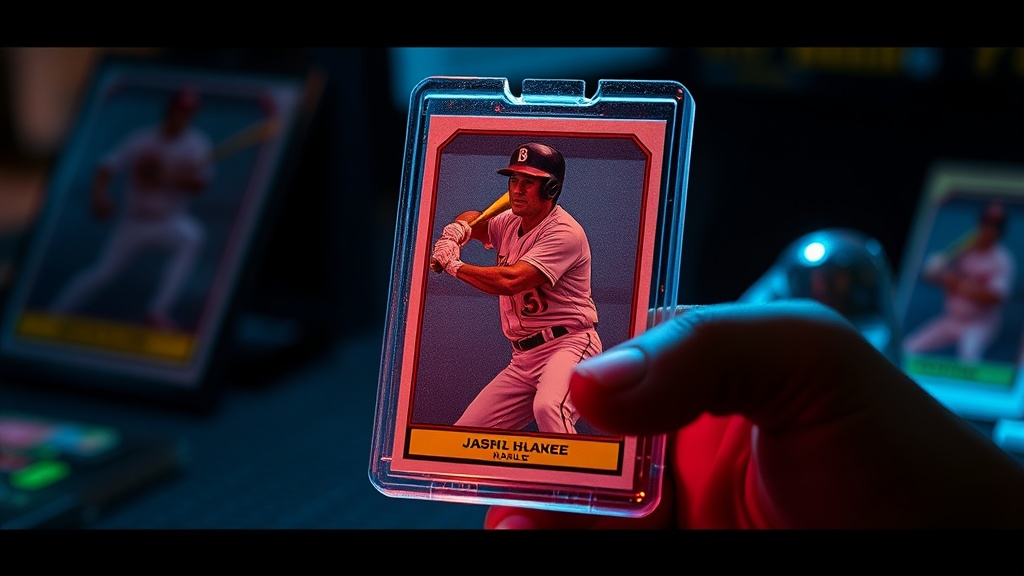
Protecting Your Baseball Card Investment from UV Damage

Are you worried that a sunny afternoon might actually cost you hundreds of dollars in card value? Light exposure—specifically ultraviolet (UV) rays—is a silent killer for many collectors. While most people focus on humidity or physical damage, light damage can be just as devastating, causing colors to fade and card stock to become brittle. This post covers how UV light affects your baseball cards and the specific steps you can take to keep your collection vibrant.
How does UV light damage baseball cards?
The damage caused by UV light is often gradual, making it a particularly frustrating problem for collectors. When baseball cards are exposed to sunlight or even harsh fluorescent lighting, a chemical reaction occurs. The pigments used in the printing process begin to break down. This doesn't just affect the image; it can change the entire color profile of the card. A once-vibrant rookie card might end up looking washed out or yellowish over time.
It isn't just about the visual appeal, though. UV rays can also accelerate the degradation of the cardboard itself. The fibers in the card stock can become brittle, making the card more prone to chipping or cracking if handled. This is especially common with vintage cards from the mid-20th century, which often used different types of paper and ink than modern high-gloss products. If you're displaying a high-value card, you aren't just looking at a piece of cardboard; you're looking at a delicate chemical composition that reacts to its environment.
Most collectors don't realize that even indirect light can cause issues. You might think your display case is safe because it isn't in direct sunlight, but even the ambient light in a room can contribute to long-term fading. If you've ever seen a card that looks "pale" compared to another copy of the same card, you're likely seeing the effects of light-induced fading. It's a permanent change—once that ink has faded, there's no way to bring it back.
Can UV-resistant sleeves actually protect my cards?
Many collectors ask if specialized sleeves can act as a shield against light. The short answer is: yes, but they aren't a magic bullet. There are high-quality, UV-protected sleeves and top loaders available on the market today. These products are designed to filter out a significant portion of harmful rays. However, they aren't completely impenetrable. A thick, high-quality top loader provides much more protection than a standard thin penny sleeve.
When choosing your protection, look for terms like "UV-resistant" or "UV-protected." These are often found in more premium brands. Using these can buy you time, but they shouldn't be your only line of defense. If you're using a display case, the type of plastic or acrylic used for the case matters immensely. Standard acrylic can actually act as a magnifying lens for light if you aren't careful, potentially increasing the heat and light exposure on the card inside.
To get a better understanding of how light interacts with different materials, you might want to check out resources from professional archival-grade suppliers. Sites like Acid Free Products offer insights into how different materials interact with sensitive items. It's a good idea to research the chemical properties of the plastics you're using to ensure they won't react with your card's finish or the ink itself.
It's also worth noting that "UV protection" is a spectrum. A sleeve that blocks 90% of UV rays is much better than one that blocks 50%, but neither will stop 100% of the light. If you're serious about long-term storage, you'll want to look at the technical specifications of your display materials. A standard penny sleeve won't do much for UV protection—it's primarily there for surface scratches. For light protection, you need something much more substantial.
Where is the best place to display a baseball card collection?
If you want to show off your collection, you shouldn't just stick it anywhere. The best place for a display is a controlled environment. Avoid placing your display cabinets near windows, even if they have blinds. Even through a window, UV rays can penetrate and cause damage over time. A better option is a room with minimal natural light or a space where you can control the lighting entirely.
LED lighting is a great friend to collectors. Unlike older incandescent or fluorescent bulbs, LEDs produce very little heat and minimal UV radiation. If you're using a lighted display case, make sure it uses LED strips. This allows you to highlight your cards without the risk of heat-related warping or light-induced fading. It’s a small detail that makes a massive difference in the long run.
Another great tip is to use dark-colored backing or opaque storage boxes when the collection isn't on display. If you have a set of cards that you aren't currently showing, keep them in an airtight, dark box. This ensures that even if the room's lighting changes, your cards remain in a stable, dark environment. You can find more technical information on archival-grade storage through the Library of Congress preservation guides, which provide general-purpose advice on protecting sensitive materials from light and environmental factors.
- Avoid direct sunlight: Even a few hours a day can cause significant damage.
- Use LED lights: They are much safer for your collection than traditional bulbs.
- Check your display: Ensure your cases are made of UV-resistant acrylic or glass.
- Rotate your display: Don't leave the same cards out for years; swap them to minimize exposure.
- Keep it dark: When not displaying, keep cards in opaque, archival-quality boxes.
The goal is to create a stable environment. Light, like heat and humidity, is one of the primary ways an environment becomes unstable. By being proactive, you can ensure that your cards look as good in twenty years as they do today. It's about being a steward of your own collection, treating every card with the respect its history deserves.