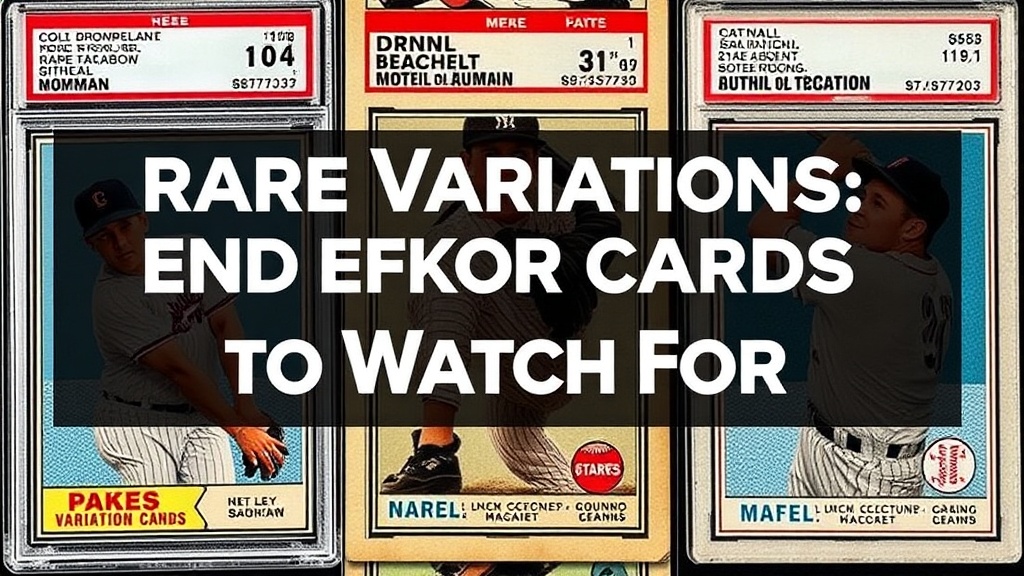
Rare Variations and Error Cards to Watch For

Miscut Edges and Centering Issues
Color Variations and Ink Errors
Missing Text or Incorrect Names
Ever wonder why one specific card from a common set suddenly sells for ten times more than its neighbors? It’s usually because of a tiny mistake or a production quirk that wasn't supposed to happen. This post looks at the specific types of rare variations and error cards that drive value in the hobby, from intentional design changes to accidental printing blunders.
Collectors often hunt for these because they represent a break in the standard production line. Sometimes, a manufacturer like Topps or Panini makes a mistake. Other times, they intentionally create a "variation" to reward the most dedicated fans. Knowing the difference is what separates a casual buyer from a serious investor.
What Are the Differences Between Error Cards and Variations?
Error cards are unintentional mistakes made during the printing or assembly process, while variations are intentional changes made by the manufacturer. An error might be a misspelled name or a player wearing the wrong uniform, whereas a variation is a planned release, such as a different colored border or a specific jersey swap. Most errors are one-offs that are quickly corrected in later print runs.
Errors usually fall into a few distinct buckets:
- Type 1 Errors: These are often "mechanical" errors, like a name being misspelled or a photo being upside down.
- Type 2 Errors: These involve physical defects, such as a card being cut incorrectly or having an off-center print pattern.
- Variation/Parallel: These are intentional. Think of the Topps Chrome Refractors or different colored foil patterns.
I've seen many collectors mistake a common parallel for a rare error. Don't let that happen. A parallel is a known, documented part of the set. An error is a mistake. If you find a card with a typo, check Wikipedia or specialized hobby databases to see if it's a documented error or just a one-of-a-kind anomaly.
The value of an error card depends entirely on how many exist. A misspelled name on a rookie card is much more valuable than a misspelled name on a bench player. It's a matter of demand. If the mistake is on a superstar's card, the price skyrockiles. If it's on a journeyman, it might just be a fun curiosity.
How Do I Identify a Rare Variation?
Identifying a rare variation requires a keen eye and a high-quality magnifying glass. You should compare your card against a "standard" version of the same card from the same set to spot the differences. Look for subtle changes in color, text, or even the thickness of the card stock.
Sometimes the difference is invisible to the naked eye. You might need to look at the back of the card. Many variations involve the card number or the biographical information on the reverse side. For example, a player might have a different birthdate or a different team name listed on one version versus another. It sounds minor, but for a completionist, it's everything.
Here is a breakdown of common variation types you'll run into:
| Variation Type | Description | Example |
|---|---|---|
| Color Parallels | The same design but with a different colored border or foil. | Bowman Chrome Blue Refractors |
| Photo Variations | The player is wearing a different jersey or has a different hairstyle. | Rookie cards with "Uncorrected" errors |
| Short Prints (SP) | Cards that were printed in much lower quantities than the base set. | Topps Heritage Short Prints |
| Serial Numbered | Cards that have a specific number (e.g., 01/50) stamped on them. | Bowman Chrome Autographs |
One thing to keep in mind—always check the official checklist for the year you are collecting. If a variation isn't on the official checklist, it might be an uncorrected error. These can be incredibly lucrative if they are authenticated. However, be careful with grading. If a card has a physical defect that wasn't intended, it might actually lower your grade. If you're worried about your cards' condition, you should look into common grading mistakes to ensure you aren't losing value on a card that was meant to be an error.
Why Do Error Cards Increase in Value?
Error cards increase in value because they are inherently scarce and often provide a unique "story" for a specific player. Scarcity is the primary driver of the collectibles market. When a manufacturer makes a mistake, they usually fix it immediately, meaning only a small fraction of the total production run contains that error. This creates a natural supply bottleneck.
There's also the "novelty factor." Collectors love the hunt. Finding a card where a legendary player's name is misspelled creates a sense of discovery. It's not just about the player; it's about the piece of history that the mistake represents. It's a quirk of the manufacturing process that became part of the hobby's lore.
That said, not every error is a gold mine. A lot of errors are just "junk." If the error is a tiny dot on the corner of a card, it won't move the needle. But if it's a significant change—like a player being listed on the wrong team—the value can be massive. This is especially true for rookie cards. A rookie error is the holy grail for many high-end collectors.
If you find something you suspect is a rare error, don't just toss it in a box. Treat it with care. I highly recommend selecting high quality magnetic one touch holders to protect it immediately. You don't want to damage a potentially high-value find before you can even verify it.
One thing I've noticed in the hobby is that "errors" can sometimes be controversial. Some collectors argue whether a card is a true error or just a different version of a parallel. This debate actually helps the market. The more people talk about a specific card, the more it becomes a "must-have" for certain sets. It builds the legend of the card.
If you're looking to invest, keep a close eye on the release schedules. Often, errors are discovered shortly after a set drops. If you see a lot of chatter on forums about a specific typo in a new Topps series, there's a good chance you're looking at a future collectible. It's worth keeping a watchful eye on the news. It's a bit like being a detective, really.
The key is to stay informed. Don't buy an "error" just because a seller claims it is one. Verify the error through multiple sources. Use professional grading services to confirm the existence of the variation. This is the only way to ensure you aren't getting burned by a fake or an exaggerated claim. A verified error is a treasure; an unverified one is just a piece of cardboard with a typo.