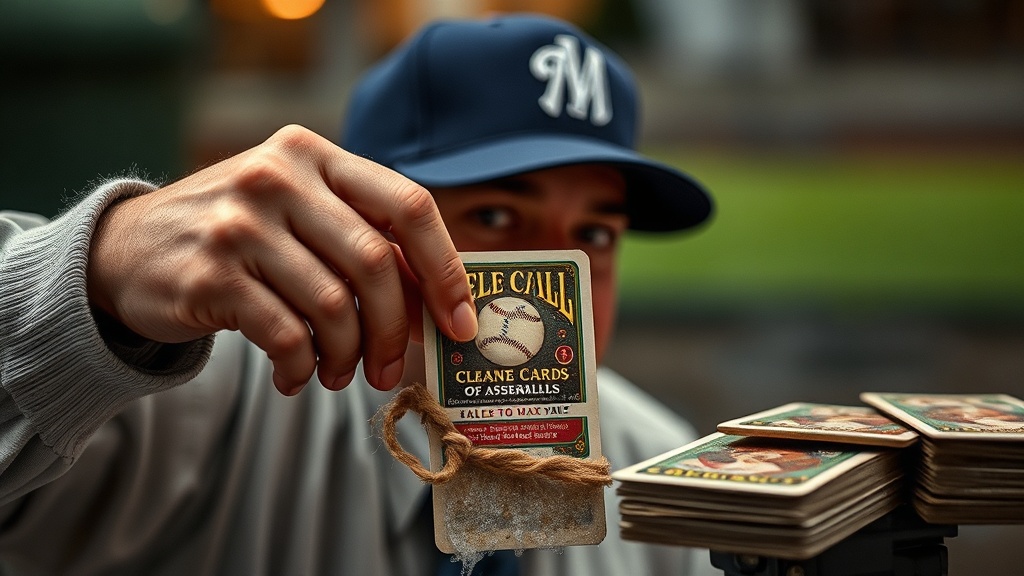
When to Wipe, When to Walk Away: Cleaning Baseball Cards Wisely

Is Cleaning a Baseball Card Ever a Good Idea?
Imagine pulling out an old shoebox from the attic, a forgotten treasure trove of baseball cards from your youth. Most are in expected condition—creases, soft corners, the usual wear and tear of being handled by an enthusiastic kid. But then you spot it: a gem, a card you know has real potential, yet it’s obscured by a layer of dust, smudges, or perhaps some light surface grime. Your immediate thought might be, “Can I clean this?” It’s a question every collector faces eventually, and the answer isn’t a simple yes or no. This guide will help you understand when a gentle cleaning might be appropriate and, more importantly, when to absolutely leave a card untouched.
The cardinal rule of card cleaning is ‘do no harm.’ Any alteration to a card, even with the best intentions, can negatively impact its condition and, As a result, its value. This is especially true for professional grading. Grading companies look for originality and will penalize cards that show signs of ‘restoration’ or ‘doctoring,’ even if it’s just a light wipe. So, before you even consider touching a card with anything, ask yourself: is this for aesthetic improvement in my personal collection, or am I hoping to increase its grade for resale? If it’s the latter, proceed with extreme caution—or don’t proceed at all. Most serious collectors and graders prefer a card to be in its original, untouched state, dirt and all, rather than risk damage from an amateur cleaning attempt.
However, there are instances where a very light, superficial cleaning might be considered. We’re talking about removing loose dust, surface fingerprints, or minimal smudges that are clearly on the card's surface and not embedded in the paper or ink. This is about presentation, making a card look its best for display or for a raw sale where strict grading isn't the primary concern. Never, under any circumstances, should you attempt to remove creases, repair tears, or use abrasive materials. Those actions constitute irreversible damage or restoration, which drastically diminish a card's appeal and authenticity.
What Tools Do You Really Need for a Gentle Card Cleaning?
If you've decided a card warrants a cautious cleaning, having the right tools—and resisting the urge to use the wrong ones—is crucial. Forget about household cleaners, alcohol wipes, or anything remotely abrasive. Your arsenal should be minimal, gentle, and designed for delicate surfaces. The goal here is precision, not power cleaning.
- Microfiber Cloths: Not just any microfiber cloth, but a fresh, clean, and extremely soft one—preferably designated solely for card care. These cloths are excellent for picking up dust and light smudges without scratching. Avoid older cloths that might have picked up microscopic debris over time.
- Soft, Fine-Bristled Brush: A very soft, clean paintbrush or a photographic lens brush can be invaluable for dislodging dust particles from textured surfaces or card edges. Ensure it's never been used with paints or chemicals, and keep it impeccably clean.
- Air Blower (Dust Blower): A simple hand-pump air blower (like those used for camera lenses) is perfect for safely removing loose dust without touching the card. This is far superior to canned air, which can emit propellants that might leave residue or be too forceful, potentially bending a card.
- Distilled Water (Spitballing, but seriously): For very minor, non-greasy smudges, a tiny, almost imperceptible dab of distilled water on a cotton swab can sometimes work. The key is *distilled* water to avoid mineral deposits, and using it so sparingly that the card barely registers moisture. This is a last resort and requires immense care; too much moisture will warp or damage the card.
- Magnifying Loupe: Not a cleaning tool, but an essential companion. A good loupe (10x-30x magnification) allows you to closely inspect the surface before and after your efforts, ensuring you're not doing more harm than good. It helps you differentiate between surface grime and embedded damage.
Always work in a clean, well-lit area. Wear lint-free gloves (like cotton or nitrile) to prevent adding new fingerprints and oils to the card's surface. Think of yourself as a surgeon performing a delicate operation—precision and sterile conditions are paramount. For more detailed insights into card preservation and handling, consider consulting resources like