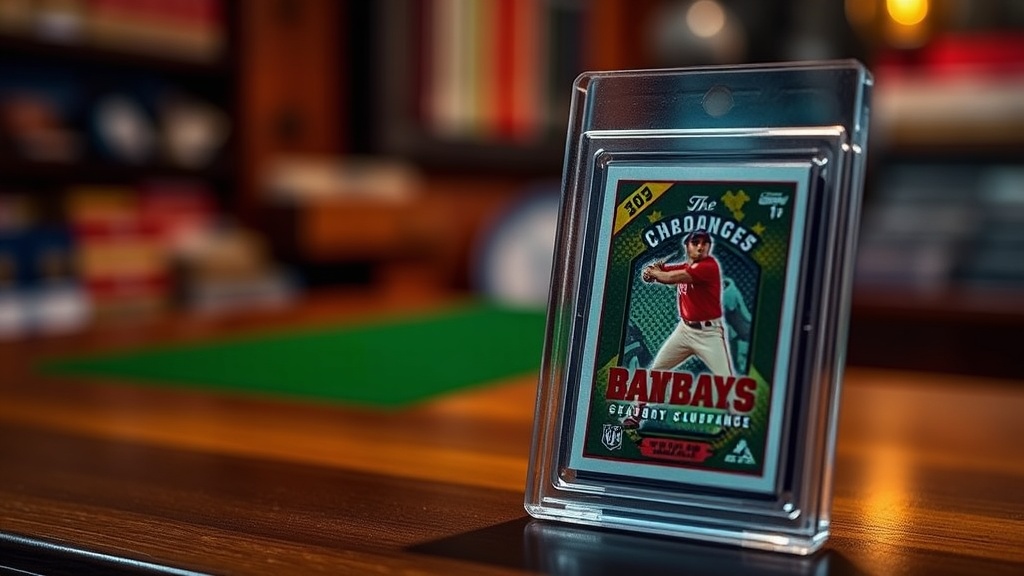
Why Penny Sleeves Are key for Baseball Card Protection

Quick Tip
Always use a penny sleeve before placing any card in a top loader to prevent the rigid plastic from scratching the card surface.
This post explains why penny sleeves serve as the first line of defense for baseball cards — and how skipping this simple step leads to surface scratches, corner dings, and faded edges that tank a card's value. Whether you're stashing rookie cards or vintage Mantles, proper protection starts here.
What Are Penny Sleeves and Why Do Collectors Use Them?
Penny sleeves are thin, clear polypropylene sleeves that fit snugly around individual trading cards. They cost roughly a penny each (hence the name) and create a barrier between the card surface and everything else — fingers, dust, other cards, the works. Without them, even careful handling leaves micro-scratches that graders at PSA and Beckett catch and penalize.
The thing is, raw cards — even those pulled fresh from packs — carry oils and debris. A penny sleeve locks out contaminants. Here's the kicker: most collectors learn this lesson the hard way after damaging a card worth hundreds. That said, prevention costs next to nothing.
Penny Sleeves vs. Toploaders: Which Do You Need First?
You need penny sleeves before toploaders. Never slide a bare card into a rigid toploader — the friction causes surface wear. The sleeve acts as a buffer, letting the card slide in smoothly and stay protected during removal.
| Protection Level | Best For | Cost (per unit) |
|---|---|---|
| Penny Sleeve | Daily handling, storage, shipping | $0.01–$0.03 |
| Toploader | Rigid protection, display, mailing | $0.15–$0.30 |
| Card Saver 1 | PSA/BGS submission prep | $0.25–$0.40 |
| One-Touch Magnetic | High-end showcase cards | $2.00–$5.00 |
Worth noting: Ultra-PRO, BCW, and Cardboard Gold dominate the sleeve market. Ultra-PRO's standard sleeves measure 2-5/8" × 3-3/4" — slightly oversized to accommodate thicker cards. The catch? Cheap dollar-store sleeves often fit too tight, causing corner damage when inserting cards.
How Do You Properly Sleeve a Baseball Card Without Damage?
Slide the card in from the sleeve's open end with the top edge leading — never force it. Hold the sleeve, not the card. For glossy or chrome cards (think Bowman Chrome or Topps Sapphire), use a "perfect fit" sleeve first, then a standard penny sleeve for double protection.
Storage matters too. Stand sleeved cards vertically in cardboard boxes or BCW storage containers. Don't stack them flat — pressure warps the cards over time. Heat and humidity? Killer. Keep sleeves away from attics, garages, and direct sunlight.
Here's the thing about grading: even a PSA 9 requires pristine surfaces. A single hairline scratch — invisible to the naked eye — drops a card to PSA 8, cutting value by 30% or more. Penny sleeves eliminate most of that risk. You spent money on the cards. Spend pennies on protection.