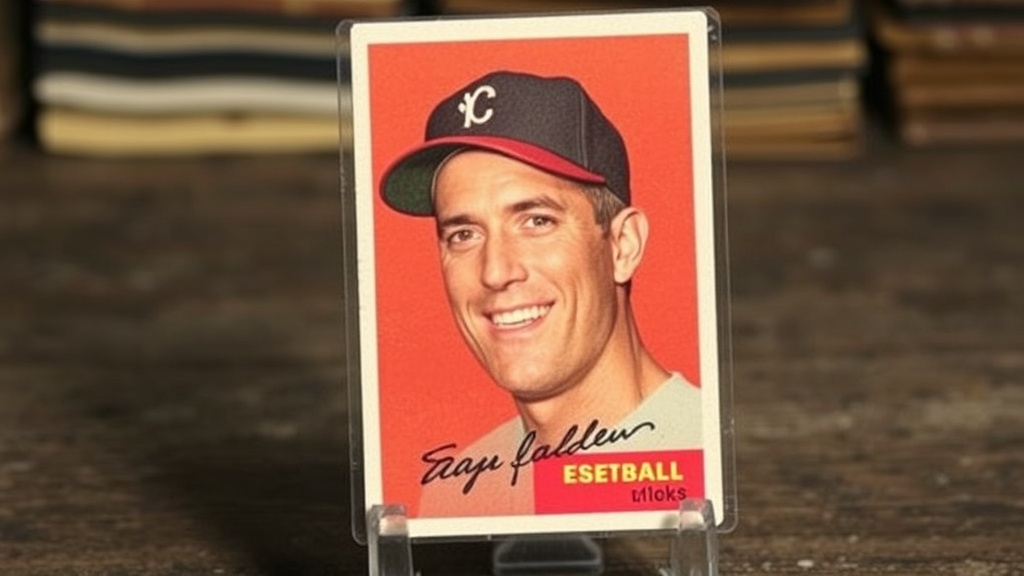
Forgotten Baseball Card Rarities Found in Attic Boxes

The Unopened Wax Pack Jackpot
Identifying High-Value Error Cards
Recognizing Rare Team Variations
Most collectors assume that the "big hits" are already accounted for in high-end auction houses or professional grading databases. They believe that if a card isn't listed on a major marketplace, it doesn't exist. That's a mistake. Some of the most valuable pieces of baseball history are sitting in unorganized cardboard boxes in basements and attics across the country, waiting for a second look. This post identifies specific types of rare cards that often go unnoticed by the untrained eye during estate sales or attic cleanouts.
The value isn't always in the player's name. Sometimes, it's in the printing error, the specific set-issue, or a unique variation that a generalist might mistake for a common card. If you're digging through old boxes, you need to know what to look for beyond just the Hall of Famers.
What Are the Most Common Rare Baseball Cards Found in Old Boxes?
The most common rare cards found in unsearched attic boxes are high-grade vintage cards from the pre-war era and specific "error" cards from the 1980s and 90s. While everyone looks for a Mickey Mantle, they often overlook the high-grade common cards from the 1950s that can still command hundreds of dollars if the condition is perfect. A "common" card in a PSA 9 or 10 grade is often more valuable than a "star" card in a PSA 4.
When you're sorting through a stack of loose cards, keep an eye out for these specific categories:
- Pre-War Issues: Cards from the T206 or 1933 Goudey eras. Even if they aren't the high-value stars, certain subsets are incredibly hard to find in decent shape.
- Unopened Wax Packs: If you find actual vintage wax packs (like 1952 Topps) rather than just loose cards, the value jumps exponentially.
- Error Cards: These are cards with typos or incorrect images that were corrected shortly after production.
- High-Grade Commons: A 1952 Topps common in a Gem Mint state is a holy grail for many set builders.
It's easy to get distracted by a flashy rookie card and miss the subtle mistake on a card that's actually worth a fortune. For example, a 1989 Upper Deck Ken Griffey Jr. rookie is great, but a corrected error card from a different set might be the real prize. You should always check for error cards when you see something that looks slightly "off" compared to the standard version.
The catch? Most people don't realize they have something valuable because they don't know the specific variations to look for. You might think you're just looking at a misspelled name, but that misspelling could be the reason the card is worth $500 instead of $5.
How Can You Identify Error Cards in a Random Stack?
You identify error cards by comparing the card in your hand to a known standard or by looking for documented production mistakes. If a player's name is misspelled, a jersey color is wrong, or a player is wearing the wrong team's uniform, you likely have an error card. These are often much more valuable than the standard version of the same card.
I've seen collectors toss out "junk" that was actually a highly sought-after variation. To avoid this, you can't just glance at the player; you have to look at the details. I recommend checking the National Baseball Hall of Fame or specialized databases to confirm player stats and eras. If a card shows a player in a uniform that doesn't match their team for that specific year, hold onto it. It's a red flag for a potential variation.
Here is a quick reference list of common errors to watch for when sorting through old collections:
- Spelling Errors: Names like "Bill Madlock" or "Ryota Igarashi" often have variations due to complex spellings.
- Color Variations: Sometimes the ink density on a certain print run is different, leading to a "darker" or "lighter" version of the card.
- Missing Text: Look for cards where the team name or player name is partially obscured or missing.
- Photo Errors: A player might be wearing a different cap or jersey than what was officially sanctioned for that season.
Don't forget to look at the back of the card too. Sometimes the error isn't on the front, but in the statistics or the biographical info. If the stats are slightly off, it might be a known error version. It's a small detail, but it's often the difference between a common card and a collector's item.
If you find something interesting, you'll want to be careful with how you handle it. If you're dealing with high-value vintage, even a little bit of finger oil can hurt the grade. You'll want to organize your collection with professional-grade binders or sleeves immediately to preserve the surface.
Is a High-Grade Common Card Worth More Than a Low-Grade Star Card?
Yes, a high-grade common card is frequently more valuable than a low-grade star card, especially in vintage sets. A mid-tier player from 1953 might only be worth a few dollars in a "Good" condition, but if that same card is in "Mint" condition, the price can skyrocket. This is because many collectors are trying to complete "Master Sets," and they need the highest possible grades to make it worthwhile.
The math of the hobby can be counter-intuitive. A rookie card of a Hall of Famer is always a safe bet, but it doesn't always beat a perfectly preserved common from a legendary era. I've seen people overlook a stack of 1950s cards because they "weren't the big names," only to find out later that the set was in incredible condition.
| Card Type | Condition (PSA/SGC) | Relative Value |
|---|---|---|
| Hall of Fame Rookie | PSA 2 (VG-EX) | Moderate |
| Hall of Fame Rookie | PSA 9 (Mint) | Very High |
| Common Player | PSA 2 (VG-EX) | Very Low |
| Common Player | PSA 10 (Gem Mint) | High |
This table illustrates how much the grade dictates the price. When you're digging through an attic, don't just look for the names you recognize. Look for the cards that look brand new. If a card looks like it was just printed yesterday, it's likely a high-grade specimen. These are the cards that actually move the needle for a collection.
One thing to keep in mind is the "eye appeal." Even if a card isn't a perfect 10, if it looks exceptionally clean, it might be worth the effort to grade. I always suggest checking for surface scratches or corner wear before you decide a card is junk. A single wayward scratch can drop a card's value by 50%.
If you find these gems, you'll need to protect them. I've learned the hard way that sunlight is the enemy. You should keep your cards bright with UV protection to ensure that the colors don't fade while you're deciding what to do with them. A faded card is a much harder sell, regardless of how rare the variation is.
Finding a true treasure in an attic requires a bit of patience and a lot of scrutiny. You're not just looking for a name; you're looking for a perfect specimen. It's a slow process, but that's part of the fun of the hunt. Whether it's a weird error or a pristine common, the value is often hidden in the details most people ignore.